
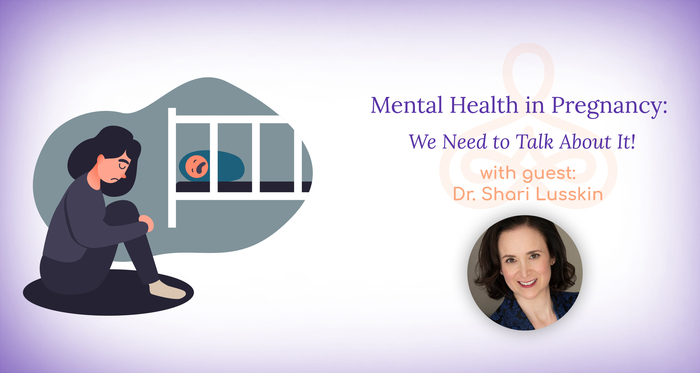
This blog is based on the Healthful Woman Podcast episode, in which Dr. Shari Lusskin joins Dr. Fox to discuss Reproductive Psychiatry, or psychiatric treatment for women during pregnancy. In this episode, they review topics including treatment options, when medication can be used, and research into psychiatric treatment for pregnant women.
Dr. Lusskin’s Journey into Reproductive Psychiatry
Dr. Lusskin shares that she had always been interested in the overlap between general medical illnesses and psychiatric disorders. Due to this, she conducted numerous consultations in liaison psychiatry, both as a medical student and as a resident. In 1996, she attended a conference at the American Psychiatric Association, where she met a group of doctors from Vancouver in British Columbia, whose expertise was in treating pregnant and postpartum women. They had started a program in women’s mental health (a fairly new subject at the time), which Dr. Lusskin attended. This was the springboard for her career in reproductive psychiatry, and she still works with that group of doctors today.
Past Psychiatric Practices for Pregnant Women
Today, many women take daily medication to help manage various mental health conditions. In the past, pregnant women were told to stop their medications, as it was thought that they would be harmful to the baby. However, that recommendation was based on very limited evidence.
“As I like to explain to patients, when you come to me or to your internist, with a sore throat, the doctor has the ability to take a throat culture to check what kind of bacteria is growing in your throat, and then figure out what kind of medication is going to kill that bacteria. There is a way to decide in the laboratory, what’s wrong? And how do we treat it?” said Dr. Lusskin, “In psychiatry, we do not have that kind of information available, especially where perinatal psychiatry is concerned. So instead of acknowledging that we didn’t have a lot of data, the default mode was just stop taking your medicine.”
One other piece of advice physicians used to often use was to direct patients to stay on their medication only if they really needed it. However, when a woman takes a medication, she may not be in a position to decide whether she actually needs it. It has to be a collaborative decision made between the treating physician and the patient, as well as whichever other physicians are involved.
“One thing I can tell you is if you find something that works, and the patient can tolerate it going off, it is not always a good idea,” explained Dr. Lusskin.
There is no “one size fits all” solution when determining if an individual patient can tolerate going off her medications during pregnancy. Each individual may be different.
Societal Misconceptions Of Mental Health in Pregnancy
There may also be misconceptions regarding the diagnosis of mental health conditions, such as depression vs. feeling depressed within society and the medical community. While major depression is a mental illness that must be treated, some may simply look at the situation as an individual feeling sad, which will pass in a couple of days. Dr. Fox points out that this thought process is not projected regarding other types of diseases.
“You wouldn’t say that about someone who has diabetes, because you’re pregnant, you don’t take your insulin anymore,” said Dr. Fox. “It doesn’t work like that, but for mental health…some of it is just our culture, our society, some of it is medical training. I think we’ve gotten a lot better, but we’re understanding of all this.”
Dr. Lusskin suggests the idea of changing the terminology from “mental illness” to “neurobiological disorder,” which pushes the point that real mental health issues are brain-based conditions that can occur in anyone, despite their character or inherent resilience.
Studies Regarding Medication Safety During Pregnancy
In general, it is difficult to perform a study on popular mental health medications and whether or not they are safe to use during pregnancy. This is because pregnant women are routinely excluded from pharmacology trials. However, there is legislation that was recently passed that mandates the development of research protocols, which will include pregnant women.
“Obviously, the problem with having a pregnant woman in a trial with something you don’t understand terribly well is you don’t want to expose the baby to an unknown risk,” explained Dr. Lusskin.” But there are ways to mitigate the risk in terms of how the studies are done. So eventually, we’ll have more data.”
However, that is not to say that there is absolutely no data available on mental health medications in pregnant women. The medical community in the U.S. does have some data regarding exposure to fluoxetine, Prozac, and other serotonergic antidepressants such as Zoloft and Paxil.
Determining Whether to Take Medication During Pregnancy
Dr. Lusskin explains that overall, the patient will often get more out of their medical care if their mental health disorder is successfully managed. For example, in severely ill women, they are less likely to keep their prenatal appointments and follow dietary recommendations, which can have a negative impact on themselves and their baby.
If a specific medication is helping mental health symptoms significantly, it may be more beneficial for the mother to continue taking it throughout her pregnancy.
Overall, the decision to take a mental health medication during pregnancy is a highly individualized decision that should be made with your healthcare provider.
Learn More
To learn more about what Dr. Fox and Dr. Lusskin have to say about this topic, listen to the whole podcast episode! For women’s health concerns, contact Carnegie Women’s Health today by completing our online contact form.