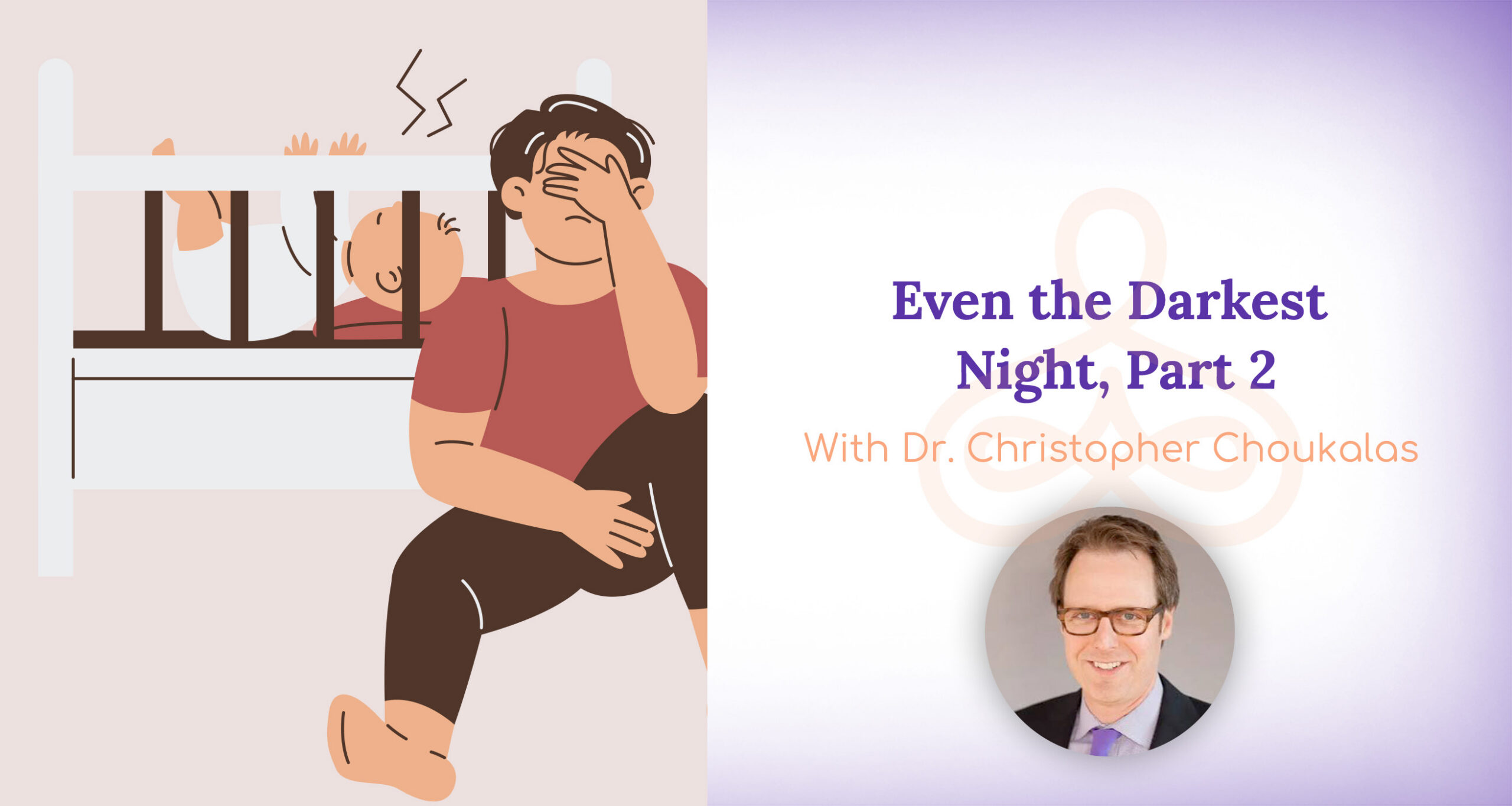
In this episode of the Healthful Woman podcast, Dr. Nathan Fox continues his conversation with anesthesiologist and author Dr. Christopher Choukalas about his book, Even the Darkest Night: A Father’s Journey of Hope and Healing from Paternal Depression. In Part 1, Dr. Choukalas shared how his wife’s life-threatening delivery of their twin daughters led to months of paternal postpartum anxiety and depression. In this episode, he explains how putting that experience into words became part of his recovery, and why he chose to share it publicly.
Dr. Choukalas’s Story
Dr. Choukalas started writing while still in the hospital after his wife, Lindsey, survived a severe postpartum hemorrhage. He didn’t set out to write a book. “It was more like I needed to make sense of what I just saw,” he explains. At first, his writing was simply a journaling exercise and a way to release what he was carrying.
The idea of publishing came later, when the twins were around one to one and a half years old. Lindsey encouraged him to share his story, believing that if other people knew about paternal postpartum depression, they would get help much sooner. Even though many friends and colleagues knew he had struggled, he had never fully told his mother and brother how difficult that time had been.
Therapy also helped him see his story more clearly. “I’ve been in denial for 45 years that my father’s abandonment had an impact on me,” he says. Working through that history became a central thread of the book, which he describes as “part memoir, part self-help.” Over three to four years of drafts, his answer to whether the experience had been worth it grew “firmer and firmer in the affirmative.” When Dr. Fox asked whether writing had been therapeutic, he answered simply: “Hugely. Hugely.”
Today, Dr. Choukalas says he can show up for his daughters “without that gnawing feeling of anticipation and need for control.” Most readers have responded warmly, telling him they feel seen and heard, though he has also faced harsh comments on social media.
Understanding Recovery from Paternal Postpartum Depression
Why speaking up matters. Fathers and non-birthing partners often don’t recognize their own postpartum symptoms, especially when they show up as irritability, anxiety, or a need for control rather than sadness. Lindsey’s reasoning for encouraging the book reflects a simple truth: the sooner someone names what they are feeling, the sooner they can get support. Open conversations within families, and with healthcare providers, help reduce the stigma that keeps many parents silent. Dr. Fox hopes stories like this one “will continue the conversation about mental health in this country.”
Tools for healing. Recovery looks different for everyone. For Dr. Choukalas, therapy helped him connect his postpartum anxiety to experiences from his own childhood, while writing gave him space to process a traumatic birth. Counseling, journaling, honest conversations with a partner, and time to rebuild routines can all play a role. Prioritizing behavioral and emotional health during the transition to parenthood benefits parents and children alike.
Learn More
To hear more about Dr. Choukalas’s journey and his book, listen to the full episode of the Healthful Woman podcast, and be sure to catch Part 1 if you missed it.