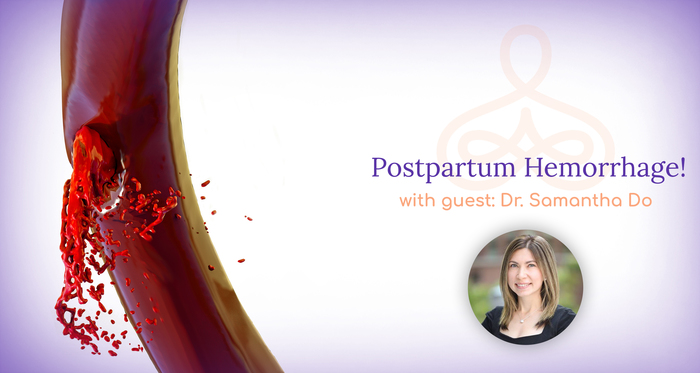
In a recent Healthful Woman episode, “Postpartum Hemorrhage!”, host Dr. Nathan Fox speaks with Dr. Samantha Do, an obstetrician at Maternal Fetal Medicine Associates, about one of the most common complications doctors prepare for at every single delivery: bleeding too much after birth. They cover why it’s surprisingly hard to define, what actually causes it, and the layered set of tools doctors reach for when it happens.
What Counts as a Hemorrhage?
Dr. Do explains that postpartum hemorrhage is notoriously hard to pin down, partly because measuring blood loss accurately in the moment is genuinely difficult, and partly because medical definitions of “too much” have shifted over the years and vary by country. Dr. Fox notes that pregnancy actually prepares the body well for this kind of blood loss, since blood volume increases substantially over the course of pregnancy, allowing a healthy woman to lose far more blood than most people would expect without any ill effects. Because of that, doctors say they’re focused less on hitting a specific number and more on how the patient is actually doing, watching her heart rate, blood pressure, and how she looks and feels in real time.
Uterine Atony: The Leading Cause
The single most common cause of postpartum hemorrhage, by far, is what’s called uterine atony, when the uterus doesn’t contract firmly enough after delivery to close off the large vessels that fed the placenta throughout pregnancy. Dr. Do walks through the factors that make this more likely: carrying twins or multiples, having extra amniotic fluid, delivering a larger baby, a long labor, an infection during labor, or having already had several prior deliveries. Somewhat counterintuitively, she notes that unlike most muscles, the uterus tends to get less efficient at contracting with each additional pregnancy rather than more so.
Preventing and Treating Hemorrhage
Prevention starts well before delivery day, which is part of why routine prenatal visits with your ob-gyn matter so much. Dr. Do explains that correcting anemia during pregnancy, often with iron supplementation, gives a woman a stronger starting point heading into delivery, since starting with a higher blood count leaves more room to tolerate normal blood loss. At delivery itself, nearly every patient routinely receives oxytocin to help the uterus contract, along with fundal massage, a firm rubbing of the abdomen that stimulates the uterus directly. If bleeding continues beyond that, doctors have several additional medications available, along with mechanical options like the Bakri balloon, a device placed inside the uterus to compress those vessels from within, which Dr. Do says has dramatically reduced the need for more invasive interventions. In the rare cases where medication and mechanical measures aren’t enough, options escalate to interventional radiology, surgical repair, and, as an absolute last resort, hysterectomy. Hospitals also now rely on structured massive transfusion protocols, giving blood products early and aggressively rather than cautiously, an approach borrowed from trauma medicine that Dr. Fox notes has meaningfully lowered maternal mortality from hemorrhage in the U.S.
Both doctors emphasize that although hemorrhage can technically happen to anyone, that’s exactly why every delivery is treated as a potential one, with preventive steps built in as routine for every patient rather than reserved for those thought to be at higher risk. As Dr. Do puts it, this kind of preparation is “something we definitely know how to manage.”
Listen to the Full Episode of the Healthful Woman Podcast
To hear the complete conversation, including how doctors decide between treatment options in real time and how hospital-wide protocols have changed outcomes, listen to “Postpartum Hemorrhage!” on the Healthful Woman podcast.
If you have questions about your own pregnancy risk factors or want personalized guidance from our team, request an appointment with Carnegie Women’s Health today. We’re here to help you feel informed and supported through every stage of pregnancy and delivery. You can also browse more topics like this on our blog.
Carnegie Women’s Health blogs are intended for educational purposes only and do not replace certified professional care. Medical conditions vary and change frequently. Please ask your doctor any questions you may have regarding your condition to receive a proper diagnosis or risk analysis. Thank you!