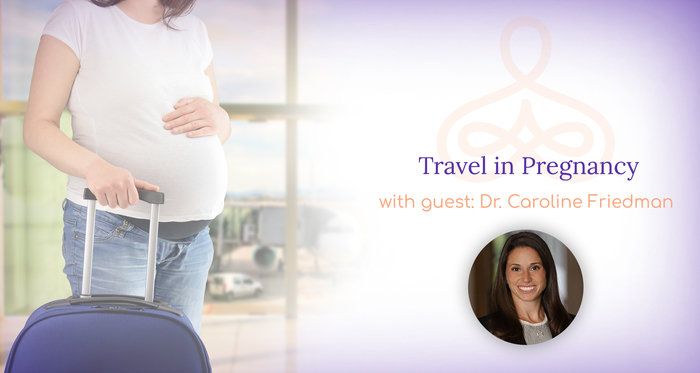
In a recent Healthful Woman episode, “Travel in Pregnancy,” host Dr. Nathan Fox speaks with Dr. Caroline Friedman, an OB-GYN at Maternal Fetal Medicine Associates, about one of the questions patients ask most often: is it safe to travel while pregnant? The two doctors walk through how timing, destination, and personal medical history shape that conversation, and why the answer is almost always more nuanced than a simple yes or no.
Why the Timing of Your Trip Matters
Dr. Friedman explains that the biggest factor in any travel conversation is where a patient is in her pregnancy. In the first trimester, the main consideration is the background chance of miscarriage that exists regardless of travel, and whether someone would be comfortable managing that, or a possible ectopic pregnancy, far from their own doctor. Both doctors agree the second trimester tends to be the easiest window to travel, since morning sickness has usually eased, energy is often better, and both miscarriage and preterm birth risk are at their lowest. The third trimester is where the calculation shifts: the real conversation becomes each patient’s own comfort with the small but real chance of going into labor away from home, and, the earlier that would happen, the more complicated the logistics become, potentially including a NICU stay far from home or, for international trips, sorting out a passport for a newborn.
Is Flying Itself Actually Risky?
A lot of patients assume the plane itself poses a danger, but Dr. Fox and Dr. Friedman are clear that this isn’t really the case. Cabin pressurization means altitude isn’t a concern, and airport security scanners expose travelers to less radiation than the flight itself does. The one genuine consideration on very long flights is the increased risk of blood clots that comes from sitting still for extended periods, which is easily reduced by getting up periodically, stretching, and staying hydrated, something pregnant travelers often do anyway simply from needing more frequent bathroom breaks.
Practical Precautions for Any Trip
Beyond timing and flight length, the doctors recommend a few concrete steps for anyone traveling during pregnancy: always wear a seatbelt positioned low across the hips, bring a brief written summary of prenatal records and due date in case care is needed away from home, and plan ahead if traveling with medications like insulin, blood thinners, or fertility-related injections, since airport security may need to see them. For international destinations, it’s also worth checking on any region-specific infection risks, like mosquito-borne illness, and taking basic precautions such as repellent and long clothing where relevant. Ultimately, both doctors emphasize that these conversations rarely end with a patient cancelling her trip; more often, patients just want reassurance that the plan they already have is reasonable, and a clear picture of what, if anything, could happen along the way.
Listen to the Full Episode of the Healthful Woman Podcast
To hear the complete conversation, including how the doctors talk through specific scenarios like babymoons, weddings, and remote destinations, listen to “Travel in Pregnancy” on the Healthful Woman podcast.
If you have questions about travel plans during your own pregnancy or want to talk through your specific situation, request an appointment with our team at Carnegie Women’s Health today. You can also browse more topics like this on our blog.
Carnegie Women’s Health blogs are intended for educational purposes only and do not replace certified professional care. Medical conditions vary and change frequently. Please ask your doctor any questions you may have regarding your condition to receive a proper diagnosis or risk analysis. Thank you!