
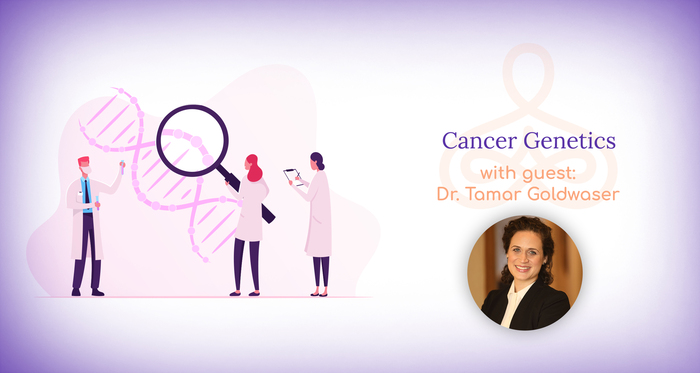
Cancer genetics is a rapidly evolving field that plays a crucial role in helping individuals understand their personal risk for certain types of cancer and the subsequent choices they must make for their reproductive health. In a recent episode of the Healthful Woman podcast, Dr. Tamar Goldwaser, a specialist in cancer genetics, and maternal fetal medicine specialist Dr. Nathan Fox discussed the risk factors for cancer and who may benefit from cancer screening tests.
What is Cancer Genetics?
Dr. Goldwaser puts the term “cancer genes” in quotation marks because the genes that cause cancer are present in every person, along with tumor suppressor genes. Two of the most common cancer-causing genes are BRCA1 and BRCA2, which can develop into cancer if a person has a BRCA mutation or a mutation in their tumor suppressor genes that makes them not function properly. However, she clarifies that “when you inherit a mutation in a tumor suppressor gene, that mutation is there in every cell of your body, but it doesn’t mean that you have cancer in every cell of your body, and it doesn’t mean you have cancer at all.” Determining if someone has these types of mutations is one way to determine the risk of someone developing cancer later in life.
Hereditary vs. Sporadic Mutations
There are two ways people can develop a genetic mutation. Hereditary mutations are those passed from parent to child and are present in every cell of the body. Sporadic or somatic mutations occur spontaneously during a person’s lifetime, often influenced by environmental factors like UV radiation, smoke, or other environmental toxins. The two-hit theory, as explained by Dr. Goldwaser, suggests that the likelihood of developing cancer involves both a hereditary mutation and a second hit from environmental exposure that triggers cell mutation. Only about 5-10% of breast cancer and ovarian cancer cases are currently known to involve inherited mutations in tumor suppression genes, such as BRCA1, BRCA2, and mismatch repair genes, which cause Lynch syndrome. Different types of cancer are caused by different genetic mutations, which can be determined through genetic testing.
Who Should Consider Genetic Testing?
Many developments have been made within the last 10 years, but it is important to recognize the limitations that still exist with genetic testing. Not all of the genes correlated to cancer development have been discovered, so genetic testing can only look for what is already known. Those considering genetic testing should also be counseled and well-informed before receiving a test. Dr. Goldwaser emphasizes the stress these tests can have on her patients, stating, “People may not be prepared to learn something like this. It’s a once-in-a-lifetime test. And so once you test like this, and you learn that you have this mutation, that you inherited it from your parents, you can’t unlearn it.” While genetic testing isn’t for everyone, it can be highly beneficial for those with strong family histories of certain cancers or other “red flags,” like multiple types of cancer, multiple generations affected by the same type of cancer, or rare types of cancer.
Moving Forward with Knowledge
For those found to carry a mutation, several management and treatment options can be discussed with your OB-GYN. These options include increased surveillance, risk-reducing surgery, or medication to help prevent cancer development. Certain options may be more strongly recommended based on the type of cancer, a patient’s age, and other factors. The best approach involves deliberate discussion and decision-making, tailored to each individual’s history and preferences.
Learn More on The Healthful Woman Podcast
Cancer genetics is a growing field, and we are proud to offer a cancer genetic program here at Carnegie Women’s Health so patients can have easier access to these important screening tests. To learn more about cancer genetics and the importance of this growing field, check out the Healthful Woman podcast or schedule an appointment with our team.