
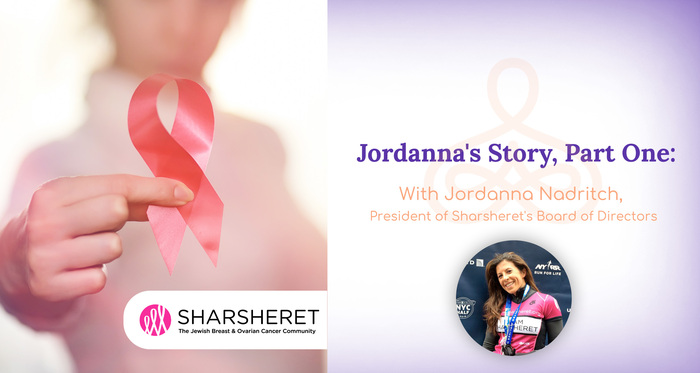
Breast cancer awareness is often framed through statistics and screenings, but behind every diagnosis is a deeply personal story. In a powerful episode of the Healthful Woman podcast, Dr. Nathan Fox sits down with Jordanna Nadritch, President of Sharsheret’s Board of Directors, to share the first part of her journey. Jordanna’s story weaves together grief, genetics, motherhood, and resilience, offering an intimate look at how breast cancer shaped her life long before she ever became a patient herself.
A Life Interrupted by Diagnosis
Seventeen years ago, Jordanna was a new mother on maternity leave, enjoying what felt like a stable and joyful chapter of life. She had just turned 30, welcomed her second daughter, and was preparing to return to work at a law firm when she received a phone call that would change everything. Her mother, who had recently discovered a lump, shared that doctors believed it was breast cancer.
At the time, breast cancer felt distant and unfamiliar to Jordanna. It was not something she had ever imagined would enter her life so abruptly. Within weeks, her mother traveled to New York for care, and what initially seemed like a treatable diagnosis quickly revealed itself to be something far more aggressive.
Understanding an Aggressive Cancer
Jordanna’s mother was diagnosed with triple-negative breast cancer, a particularly aggressive form that does not respond to hormone-based treatments. In 2008, treatment options for triple-negative breast cancer were limited, and instead of shrinking with chemotherapy, the cancer progressed rapidly.
Despite undergoing an emergency mastectomy and aggressive treatment, Jordanna’s mother’s health declined quickly. Within just five months of diagnosis, she passed away on the eighth night of Hanukkah. For Jordanna and her family, the speed and severity of the illness were shocking. Breast cancer was not supposed to look like this.
Grief, Fear, and an Unexpected Discovery
In the months following her mother’s death, Jordanna was encouraged to undergo genetic testing. Although her mother had tested negative for BRCA1 and BRCA2, Jordanna agreed to testing, expecting reassurance. Instead, she learned that she was a carrier of the BRCA1 gene.
Reflecting on the moment she received her test results, Jordanna said, “I sat there and paused. Okay, I’m not thinking about this clearly. I obviously have the gene from my dad. And that to me was where the plot twist came in.”
The result was confusing and devastating. Further investigation revealed that the gene mutation came from her father’s side, uncovering a family history of breast and ovarian cancer that had never fully come into focus before. Suddenly, Jordanna was facing not only the grief of losing her mother, but the fear that she herself was at extraordinarily high risk.
Living Under Constant Surveillance
In her early 30s, Jordanna entered a cycle of intense medical monitoring. She underwent frequent mammograms, ultrasounds, and MRIs, sometimes every three months. While these screenings were meant to protect her, they also became emotionally exhausting. She did not have cancer, yet her life revolved around the possibility of developing it.
At the same time, Jordanna was still grieving, raising young children, and hoping to expand her family. She chose to focus on living her life while committing to close monitoring, keeping her BRCA status private, and sharing it only with a small inner circle.
Motherhood and a Difficult Decision
After welcoming her third child, a son named in honor of her mother, Jordanna continued surveillance under the care of specialists. On her 34th birthday, during a consultation at Memorial Sloan Kettering, her surgeon delivered a stark recommendation. Based on her genetic profile and family history, Jordanna’s risk of developing triple-negative breast cancer at a young age was extraordinarily high.
The advice was clear: a preventive double mastectomy could save her life.
Jordanna reflected on the gravity of her mother’s impact, saying, “Every single day. She saved my life. It’s hard to find the positive in such a tragic story because it really was tragic what happened to her…But I believe that she saved my life, and because of that, I’m going to save my children’s lives, and pass it forward that way.”
Though emotionally unprepared and still fiercely private, Jordanna knew she had to act. She assembled a surgical team that felt right to her, including physicians connected to her mother’s care, and prepared herself for surgery.
A Life-Saving Choice
Just before her scheduled procedure, imaging revealed concerning cellular changes. While no invasive cancer was ultimately found, pre-cancerous cells were present, reinforcing that the decision had come at exactly the right time.
Looking back, Jordanna reflects on a truth that is both heartbreaking and profound: her mother’s illness likely saved her life. Had her mother not been diagnosed, Jordanna may never have discovered her genetic risk in time.
Looking Ahead
This episode marks the first half of Jordanna’s story. In the next chapter, she will share more about life after surgery, her evolving relationship with Sharsheret, and how she transformed personal loss into advocacy and support for others navigating breast cancer risk.
To hear Jordanna’s story in her own words, listen to the full Healthful Woman podcast episode. For more information about genetic testing, breast cancer risk, or supportive resources, speak with your healthcare provider or visit Sharsheret.org to learn how community and education can make a life-saving difference.