
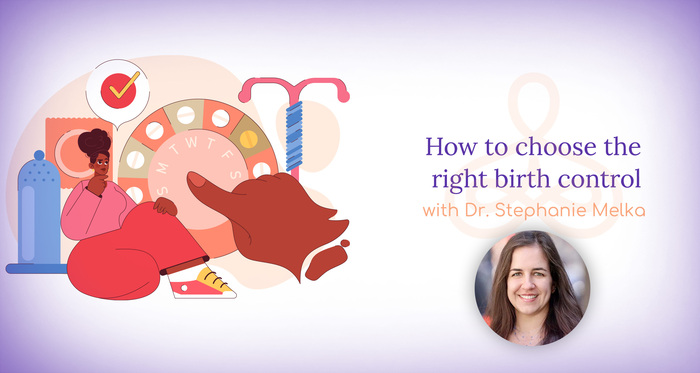
Choosing the best birth control method can be a complex and personal decision, influenced by health, lifestyle, and reproductive goals. In a recent Healthful Woman podcast, Dr. Stephanie Melka, a board-certified OB-GYN, shares essential insights to help women navigate this choice confidently.
Understanding Your Birth Control Options
Dr. Melka emphasizes the importance of individual selection and understanding all your contraceptive options, since many patients are swayed by online myths or feedback from their friends. Each method has distinct features, benefits, and potential side effects that should be carefully considered when choosing the best choice of contraceptive for your personal lifestyle and preferences.
Oral Contraceptive
Oral contraceptive, or the birth control pill, is one of the most common types of contraceptives, along with IUDs. They are typically made with estrogen and progestin, which help regulate women’s menstrual cycles and prevent pregnancy. Some women have seen improvement in acne and pre-menstrual symptoms like pain and heavy bleeding with the use of birth control pills. One of the main concerns with this method is that women must take the pill at the same time every day, so it might not be ideal for those with shifting work hours or routines. Side effects include potential weight gain, mood shifts, skin changes, and a low risk of blood clotting, which affects about 1/10,000 women. Different types of oral contraceptives have differing amounts of estrogen, and the dosage will vary for each patient.
IUD (Intrauterine Device)
The IUD is a T-shaped device inserted into the uterus by an OB-GYN. There are two types: a non-hormonal copper IUD, which can cause heavier periods and more cramping, and the hormonal IUD, which has progesterone and often causes no periods or light periods with some occasional spotting. Placing the IUD can be difficult and uncomfortable for patients, but some providers, including Dr. Melka, offer nitrous gas or lidocaine injections. Once placed, there is also a slight risk of the IUD shifting or falling out. However, the IUD remains a popular choice because women do not have to worry about remembering a pill or changing a contraceptive ring every few weeks. Instead, the IUD can last anywhere from 3-10 years or more with recent advancements.
Natural Family Planning
Natural family planning refers to many things, including the pull-out method, tracking your menstrual cycle, or not having sex on certain days. This type of birth control is often used by individuals who are allergic to condoms or don’t want the side effects of birth control medications or an IUD. This method has the highest rate of failure and is not advised for women who strongly do not want to be pregnant. Dr. Melka explains that it can work, but even when doing everything correctly or “even with timing menstrual cycles, you really have to stop having sex a full seven days before ovulation. If you have irregular cycles, you may ovulate sooner than expected.”
Condoms
Condoms are “the only contraception that’s going to reduce risk of sexually transmitted infections (STIs),” Dr. Melka explains. Condoms are also beneficial for women who do not want to regularly take a pill, especially if they are not having sex frequently. However, some men find them uncomfortable. Additionally, there is a low rate of failure if the condom breaks.
Nexplanon (Progesterone Implant)
Nexplanon is implanted into the inner forearm or upper arm by a gynecologist. It decreases bleeding but may increase the likelihood of irregular bleeding or spotting. This device lasts three years.
Tube Tying/Removal
Women who are certain they do not wish to be pregnant and those who want to be done having children can opt for a surgical procedure to tie their tubes or remove them. This is a laparoscopic procedure done under general anesthesia, or can be completed during a C-section. Removal of the tubes is sometimes preferred, since it decreases the risk of developing ovarian cancer later in life.
What Type of Birth Control is Right for You?
When Dr. Melka first meets with a patient considering birth control, she asks several questions about the patient’s medical history, including their family’s medical history, whether they smoke, and if they are on other medications. All of this is used to determine whether an oral contraceptive is a safe option. Estrogen can increase the risk of deep vein thrombosis (DVT), which is a blood clot in the legs, in women who smoke and those with a family history or personal history of blood-clotting disorders. Because of these safety concerns, it is necessary to receive your birth control medication from an OB-GYN who can discuss all the risks, benefits, and options in detail.
Learn More
Choosing birth control is not only about preventing pregnancy but also about enhancing quality of life. With numerous options available and ongoing advancements, women can find a safe and effective method tailored to their needs. Listening to experts like Dr. Melka and engaging in open discussions with healthcare providers supports informed, confident choices. To learn more about your birth control options, check out the full podcast episode or schedule an appointment with our team at Carnie Women’s Health.